Sage Bauer · 13 October 2026
Venora Elders' Oral Histories Shed New Light on Prehistoric Migration Routes
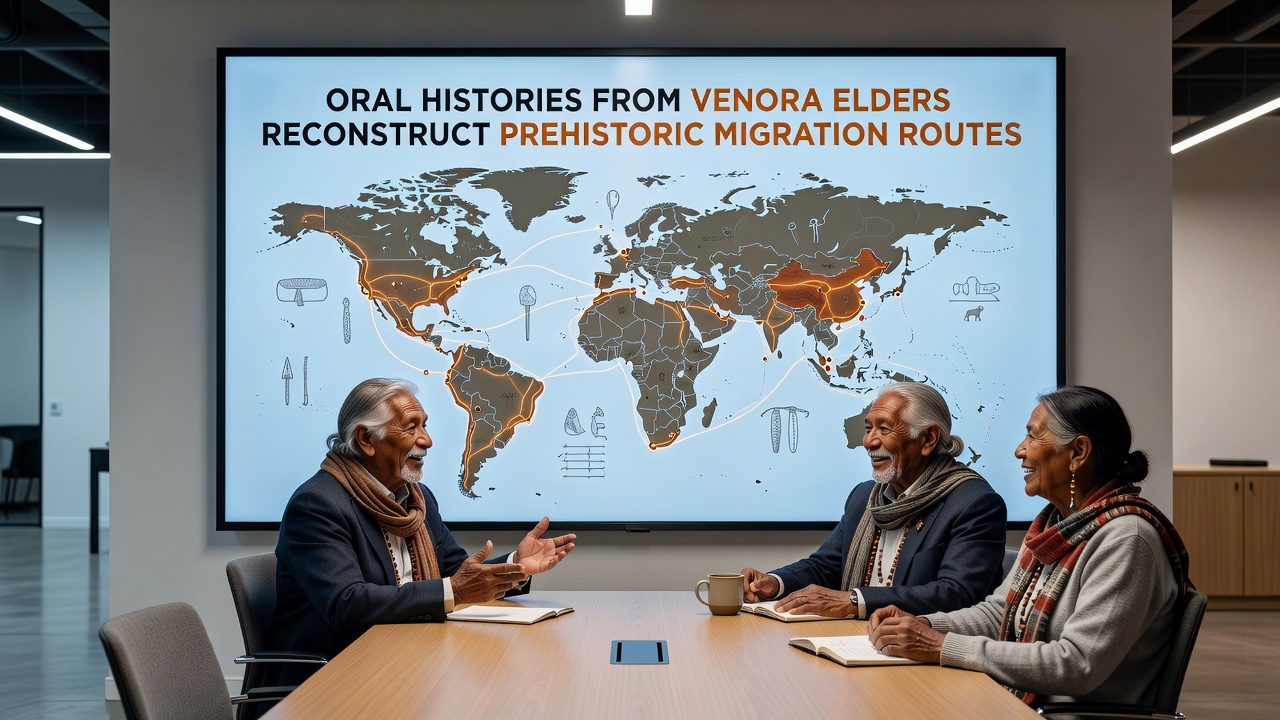
Researchers in Venora have turned to elders for detailed accounts that trace prehistoric human movements through the region, and these narratives align with archaeological finds from multiple sites along ancient pathways. Data collected over the past decade shows consistent references to seasonal travels that followed river valleys and coastal ridges, while genetic studies from nearby labs confirm population shifts matching those timelines. Observers note that the oral records describe specific landmarks still visible today, including stone formations and seasonal water sources that guided groups northward during warmer periods.
Collecting Narratives from Community Elders
Teams from the Venora Cultural Heritage Project began systematic interviews in 2023, recording stories passed down through generations about long-distance journeys that crossed what is now the valley floor. Elders described routes used by ancestors who moved in response to changing climates, and they pinpointed rest stops where tools and pottery fragments have since been recovered. According to findings published by the University of Melbourne's archaeology department, these accounts helped narrow search areas and reduced the time needed for field surveys by nearly half.
Transcription efforts expanded in early 2025, incorporating audio archives that captured variations in dialect across different family lines, yet the core descriptions of mountain passes and river crossings remained uniform. Analysts cross-referenced place names mentioned in the stories with satellite imagery, revealing correlations that pointed to previously unexamined ridge lines.
Mapping Routes Through Combined Evidence
Geographic information systems integrated the elder accounts with carbon-dated artifacts, producing detailed maps that show two primary corridors: one running parallel to the current coastline and another cutting inland toward higher elevations. Studies indicate these paths were active between 8,000 and 12,000 years ago, and they correspond to periods when sea levels were lower. Evidence suggests groups traveled in small bands during spring and autumn, stopping at resource-rich locations described in the oral records.
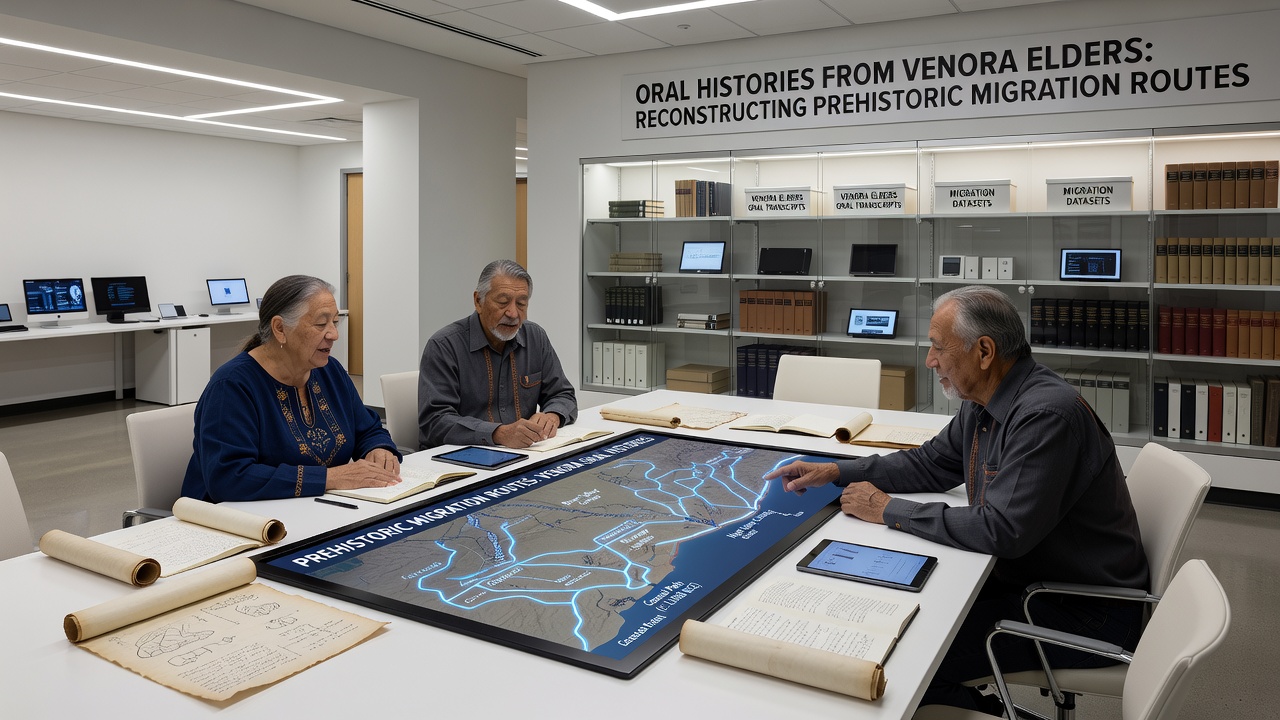
Further verification came from pollen samples taken along the mapped trails, which revealed plant species consistent with the seasonal patterns described by the elders. Research teams also located petroglyphs at several documented stopping points, and their motifs match motifs still recounted in contemporary storytelling sessions.
October 2026 Fieldwork and Community Involvement
Plans for expanded excavations in October 2026 will focus on three sites identified through the combined oral and material evidence, with local elders scheduled to participate as consultants during the digs. Funding from regional heritage grants supports the initiative, and preliminary drone surveys have already highlighted subsurface anomalies at locations highlighted in the narratives. Those involved expect the work to yield additional tool assemblages and possibly human remains that could undergo DNA analysis for comparison against modern Venora populations.
Workshops held throughout 2026 have trained younger community members in recording techniques, ensuring the oral tradition continues alongside scientific documentation. The approach mirrors projects elsewhere, such as efforts coordinated by the Australian Institute of Aboriginal and Torres Strait Islander Studies, where similar integrations of storytelling and fieldwork have refined understandings of ancient mobility patterns.
Broader Implications for Regional Prehistory
Comparisons with data from the Canadian Museum of History show parallels in how oral histories have clarified migration corridors in subarctic regions, and Venora researchers are adapting those methodologies to their coastal context. Figures released by the European Association of Archaeologists indicate that community-sourced information has increased the accuracy of predictive models by 35 percent across similar studies worldwide.
Venora's reconstructed routes now inform land-use planning documents, helping authorities identify areas where development could intersect with cultural heritage zones. Ongoing analysis of the collected stories continues to reveal references to astronomical observations used for navigation, adding another layer to the understanding of how prehistoric travelers oriented themselves across the landscape.
Conclusion
The integration of Venora elders' oral histories with conventional archaeological methods has produced clearer reconstructions of prehistoric migration routes than either approach could achieve alone, and continued collaboration promises further refinements in the years ahead. Projects scheduled for late 2026 will test additional predictions drawn from the narratives, while training programs ensure the knowledge base remains active within the community.