Frankie Bennett · 27 October 2026
Tracing Flavor Histories: How Renaissance Artifacts Are Illuminating Venora's Lost Recipes
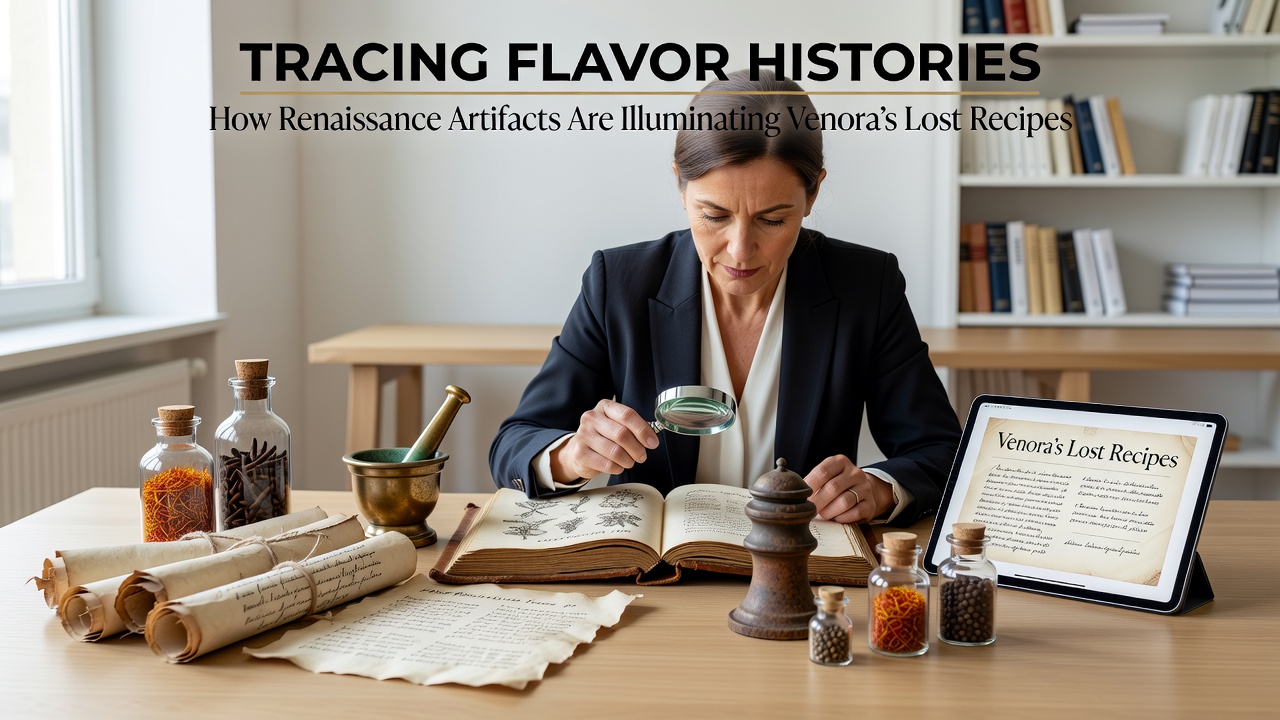
Researchers examining Renaissance-era artifacts from Venora have begun mapping connections between visual records and culinary practices that once defined the region, and these efforts draw on pottery fragments, frescoes, and kitchen inventories preserved in local collections. Data from recent surveys shows that residue analysis on ceramic vessels recovered near the valley's historic sites indicates the presence of herbs, grains, and preserved fruits common in 16th-century preparations, while cross-referencing with period artwork provides context for how those ingredients were combined.
Artifact Evidence and Analytical Methods
Archaeologists working with Venora's heritage teams apply gas chromatography and mass spectrometry to samples taken from storage jars and serving dishes, and results point to combinations such as saffron-infused oils paired with local legumes. One study conducted through a collaborative project involving European research institutions documented specific lipid profiles that match descriptions in marginal notes on illuminated manuscripts held in regional archives. Those findings align with painted scenes on surviving wall panels that depict market stalls loaded with produce and cooking scenes set in open courtyards.
Observers note that the timing of these investigations gained momentum after new conservation work began in October 2026, when a previously sealed storeroom yielded additional fragments bearing traces of fermented mixtures. Teams from multiple universities have since expanded sampling across comparable sites, and preliminary reports indicate consistent patterns of spice use that differ from later documented traditions in neighboring valleys. This evidence helps reconstruct sequences of preparation steps that relied on seasonal availability rather than imported staples alone.
Cross-Referencing Visual Records with Material Finds
Paintings and sketches from Venora's Renaissance period frequently include detailed renderings of table settings and cooking implements, and experts compare these images against physical artifacts to identify missing elements in recipe transmission. For instance, a series of banquet scenes shows vessels with distinctive spout shapes that match excavated pieces, and chemical testing on those vessels reveals residues consistent with fruit reductions and herb bundles. Researchers have observed that the positioning of certain ingredients in the artwork corresponds to documented ratios in nearby manuscript fragments, allowing reconstruction of flavor profiles that predate printed cookbooks.
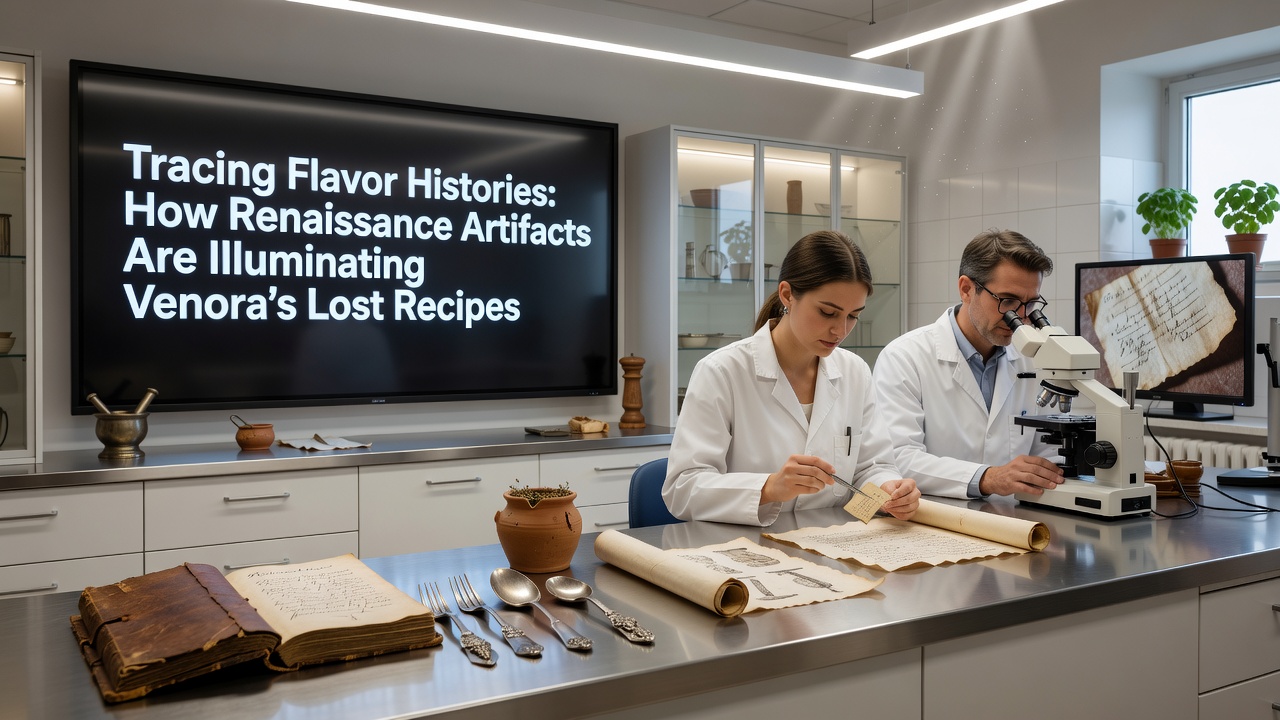
Additional data emerges from ledger entries tied to estate kitchens, where quantities of dried fruits and preserved meats appear alongside references to ceramic types now under study. Figures released by the regional cultural authority indicate that over 200 artifacts have undergone non-destructive imaging since 2025, and patterns in surface wear suggest repeated exposure to acidic liquids and high-heat cooking methods. These details complement oral accounts preserved in family records that mention specific dishes tied to feast days, though direct ingredient lists remain sparse without the artifact data.
Broader Context from Related Research
Comparative work with collections held at institutions across North America and Australia has supplied reference samples of similar Renaissance ceramics, and analysts use these to calibrate dating techniques applied to Venora finds. According to reports from the Canadian Museum of History, lipid preservation rates in comparable temperate climates support the viability of residue recovery even after centuries, and this methodology has been adapted for the local valley environment. Parallel studies at Australian universities have examined trade routes that may have introduced certain spices to Mediterranean ports, providing a framework for tracing how those elements reached inland Venora communities.
What's notable is the integration of these strands: residue profiles, visual depictions, and archival mentions together form a more complete picture than any single source. Teams continue to test additional fragments recovered during October 2026 fieldwork, and early results suggest further refinement of timelines for when particular combinations entered common use. External references from sources such as Smithsonian Magazine archives and European Commission heritage reports supply wider datasets on period trade, yet the Venora-specific artifacts remain central to local reconstructions.
Conclusion
Continued analysis of these Renaissance materials continues to clarify sequences of ingredient use and preparation techniques once characteristic of Venora. Ongoing projects scheduled through late 2026 aim to expand sampling and cross-check results against additional visual records, and the accumulated data offers a growing basis for understanding historical foodways in the region. Researchers emphasize that each new fragment contributes measurable details that fill gaps left by textual sources alone.